
The most common rugby injuries in Singapore are hamstring strains, ankle sprains, shoulder and AC joint injuries, knee injuries and concussion. Physiotherapy helps by managing pain, restoring strength and movement, and using return-to-play testing before you go back. Suspected concussion needs a doctor first, before any physio or training.
Rugby is a collision sport played on hard, fast grounds, and Singapore's heat and year-round schedule add load. Knowing the common injuries, and what a good rehab plan looks like, helps you get back sooner and stay there. This guide covers the injuries we see most, what physio does for each, how return-to-play testing works and how to reduce your risk.
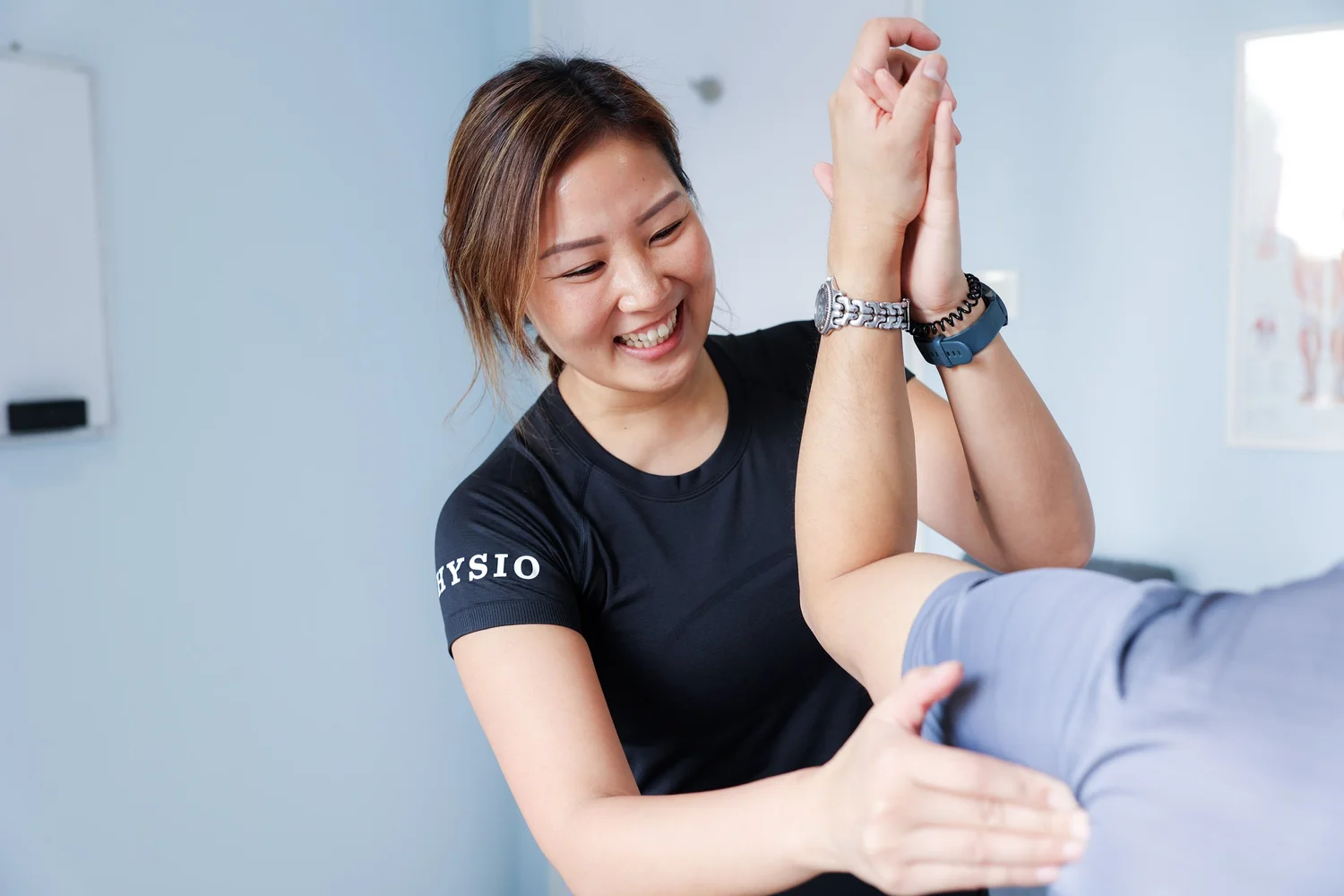
Strength Clinic Academy (SCA), a physiotherapy and personal training clinic in Singapore with locations at OUE Downtown and COMO Orchard, supports rugby players from club level to serious competitors. We also provide physio for the Singapore Wanderers throughout the season.
What are the most common rugby injuries?
The most common rugby injuries affect the hamstrings, ankles, shoulders, knees and head. Sprinting, tackling, rucking and changes of direction load these areas hardest.
Each one needs a different plan, so an accurate assessment comes first. Our sports injuries and performance rehab team starts there.
How does physio treat a hamstring strain?
Physio treats a hamstring strain by calming symptoms early, then progressively loading the muscle until it can sprint again. A strain is a tear in the muscle fibres at the back of the thigh, often during sprinting or kicking.
- Early stage: protect the area, manage pain and keep gentle movement going.
- Middle stage: build strength, including lengthened and eccentric work.
- Late stage: progress to running, acceleration and top-speed sprinting.
Recovery time depends on the grade of the strain, so your physio will give you a timeframe after assessment.
Can physio help an ankle sprain?
Yes. Physio helps an ankle sprain by restoring movement, strength and balance so the joint copes with cutting and landing again. An ankle sprain is a stretch or tear of the ligaments on the outside of the ankle, usually after rolling it.
- Manual therapy and exercise to regain range of motion.
- Calf, foot and hip strengthening.
- Balance and agility drills that mimic match movements.
If you cannot put weight on the foot, or the ankle looks deformed, see a doctor first. Our foot and ankle pain page explains more.
What about shoulder and AC joint injuries?
Shoulder and AC joint injuries are usually caused by a fall onto the shoulder or a heavy tackle. The AC (acromioclavicular) joint is where the collarbone meets the shoulder blade, and it can be sprained or separated on impact.
Physio focuses on pain relief, restoring shoulder movement and rebuilding strength in the rotator cuff and shoulder blade muscles. Contact work comes back last, once you can load the arm fully. Severe deformity or a suspected dislocation needs urgent medical review. See our neck and shoulder pain page for more.

How are rugby knee injuries managed?
Rugby knee injuries are managed by diagnosing the structure involved, then rebuilding strength and control around the joint. Common problems include ligament sprains, meniscus injuries and ACL tears.
Some injuries heal with rehab alone. Others need surgery, followed by structured rehab. We support both pre-op and post-surgery programmes. Our knee pain and leg injuries page covers the detail.
What should you do after a suspected concussion?
See a doctor first. A concussion is a brain injury caused by a blow to the head or body, and it needs medical assessment before anything else.
If a player has a suspected concussion, they should leave the field and not return that day. We do not give treatment advice for concussion in this article. Follow your doctor's guidance and your team's concussion protocol. Signs such as worsening headache, repeated vomiting, confusion or drowsiness need emergency care.
How does return-to-play testing work?
Return-to-play testing checks that you can meet the demands of rugby before you step back on the field. It replaces guessing with measurable criteria.
- Pain-free daily movement and full range of motion.
- Strength tests compared with the uninjured side.
- Power and jump testing on force plates.
- Sport-specific drills: sprinting, cutting, tackling and contact.
- Sign-off from your physio, and your doctor where needed.
We use VALD ForceDecks force plates and the VALD DynaMo dynamometer to measure force and strength. Our metabolic screening and functional movement screening can also show gaps before they become injuries.

How can you prevent rugby injuries?
You can lower your risk by building strength, managing load and warming up properly. No plan removes risk in a contact sport, but these habits help.
- Strength train year-round, especially hamstrings, glutes, calves and shoulders.
- Include sprint and change-of-direction work in training.
- Increase training load gradually, particularly after a break or when moving to Singapore.
- Warm up fully, and hydrate well in the heat.
- Get niggles checked early rather than playing through them.
Our personal training team works with physios from one plan, so rehab flows into performance work.
Where can you get rugby physio in Singapore?
You can see an SCA physiotherapist at OUE Downtown (6A Shenton Way, #03-06) or COMO Orchard (30 Bideford Road, Level 4). OUE Downtown is open Mon to Fri 6am to 8pm and Sat 7am to 4pm. COMO Orchard is open Mon to Thu 8am to 8pm, Fri 8am to 6pm and Sat 8am to 4pm. Both are closed on Sundays.


Key takeaways
- The most common rugby injuries are hamstring strains, ankle sprains, shoulder and AC joint injuries, knee injuries and concussion.
- Physio restores strength, movement and confidence in stages, from early pain management to sport-specific drills.
- Suspected concussion needs a doctor first, before any physio or training.
- Return-to-play testing uses measurable strength, power and sport-specific criteria.
- Year-round strength work and gradual load increases help lower injury risk.
Frequently asked questions
What is the most common rugby injury?
Hamstring strains, ankle sprains, shoulder injuries and knee injuries are among the most common in rugby. Exact rates vary by level and position..
How long does it take to return to rugby after an injury?
It depends on the injury, its severity and how you respond to rehab. Your physio will set a timeframe after assessment and base your return on test results, not just the calendar.
Do I need a doctor before seeing a physio?
For most muscle and joint injuries you can book a physio directly. See a doctor first for suspected concussion, a possible fracture or dislocation, numbness, or severe pain after impact.
Can physio help prevent rugby injuries?
Yes. A physio can screen your movement, find strength or mobility gaps and build a plan to address them. This lowers risk but cannot remove it in a contact sport.
Do you work with rugby teams in Singapore?
Yes. We provide physio for the Singapore Wanderers throughout the season and also see individual players and expats at both clinics.
What is return-to-play testing?
It is a set of strength, power and sport-specific tests that show whether an injured area can handle match demands. It helps you go back with a clear picture of where you stand.
Can I start personal training while I rehab an injury?
Often yes, once your physio agrees. Our personal trainers can bridge rehab and performance work, training the parts of your body that are not injured.
Injured, or want to stay on the pitch? Message us on WhatsApp at +65 8878 5539 or fill in our enquiry form to book a physio assessment at OUE Downtown or COMO Orchard.