
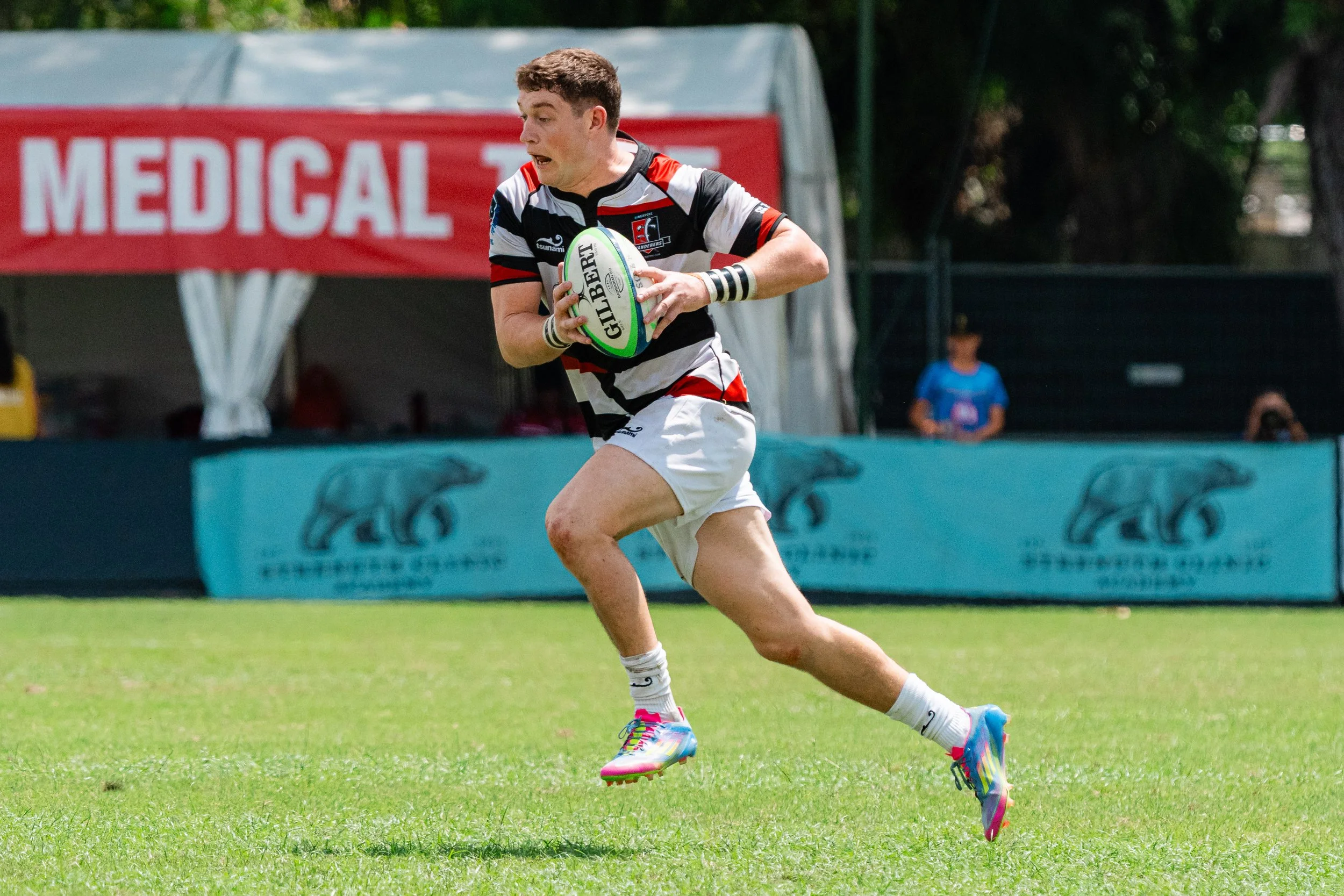
photocredit : https://www.instagram.com/shutterlegion
A sports injury clinic in Singapore assesses, treats and rehabilitates injuries from training and competition. At Strength Clinic Academy (SCA), physiotherapists use manual therapy, exercise rehab and return-to-sport testing, then work with personal trainers on one plan. We have clinics at OUE Downtown and COMO Orchard.
Rugby sevens is fast, physical and unforgiving. When the 77th Singapore Cricket Club International Rugby 7s (SCC 7s) ran from 20 to 22 November 2026 at The Padang, our physiotherapist Donavan took the lead in looking after Singapore Wanderers for the weekend. Here is what a sports injury clinic in Singapore actually does, and the injuries we see most from rugby and other field sports.

Photo: @shutterlegion
What does a sports injury clinic in Singapore do?
A sports injury clinic diagnoses and treats injuries caused by training or competition, then guides you back to your sport safely. It is different from a general clinic because the goal is performance, not just pain relief.
Strength Clinic Academy (SCA), a physiotherapy and personal training clinic in Singapore with locations at OUE Downtown and COMO Orchard, runs physiotherapy and training under one multidisciplinary team. Physiotherapists, personal trainers, exercise physiologists and nutritionists work from a single plan, so your rehab does not stop when the pain does.
What are the most common rugby injuries?
The most common rugby injuries are ankle sprains, hamstring strains, shoulder injuries, knee ligament injuries and concussion. Contact, sprinting and sudden changes of direction load the same joints and muscles again and again.
Ankle sprains
Ankle sprains happen when the foot rolls during a tackle, sidestep or landing. Early physio helps manage swelling, restore movement and rebuild balance, which lowers the chance of repeat sprains. See our page on foot and ankle pain.
Hamstring strains
A hamstring strain is a tear or overstretch of the muscles at the back of the thigh, usually during sprinting. Rehab combines graded strengthening, sprint exposure and load management. Rushing back is the classic reason these come back.
Shoulder injuries
Tackling puts the shoulder under heavy stress, from AC joint sprains to dislocations and rotator cuff irritation. Treatment mixes manual therapy with strength work for the shoulder blade and rotator cuff. Read more on neck and shoulder pain.
Knee ligament injuries
Twisting and awkward landings can injure the ACL, MCL or meniscus. Some need surgery, and either way structured rehab matters. Our knee pain and leg injuries page explains how we approach it, including pre-op and post-surgery rehab.

Photo: @shutterlegion
When should I see a physio for a sports injury?
See a physio if pain lasts more than a few days, if you cannot put weight on the limb, or if swelling and stiffness are limiting movement. Early assessment usually shortens the road back.
See a doctor or go to A&E urgently if you have any of these red flags:
- A suspected fracture or visible deformity
- A head knock with confusion, vomiting, worsening headache or drowsiness
- Numbness, pins and needles or weakness that spreads
- A joint that locks or gives way repeatedly
For head injuries, the NHS advises getting medical help after any significant blow to the head.
What happens at a sports physio appointment?
Your first session starts with a detailed history and hands-on assessment, then moves straight into treatment and a plan. Here is the usual flow:
- We ask how the injury happened, your sport and your goals.
- We test movement, strength and stability.
- We treat with manual therapy, dry needling, sports massage or exercise, depending on what you need.
- We give you a rehab plan and a realistic timeline.
- We link you with a trainer when you are ready to rebuild.
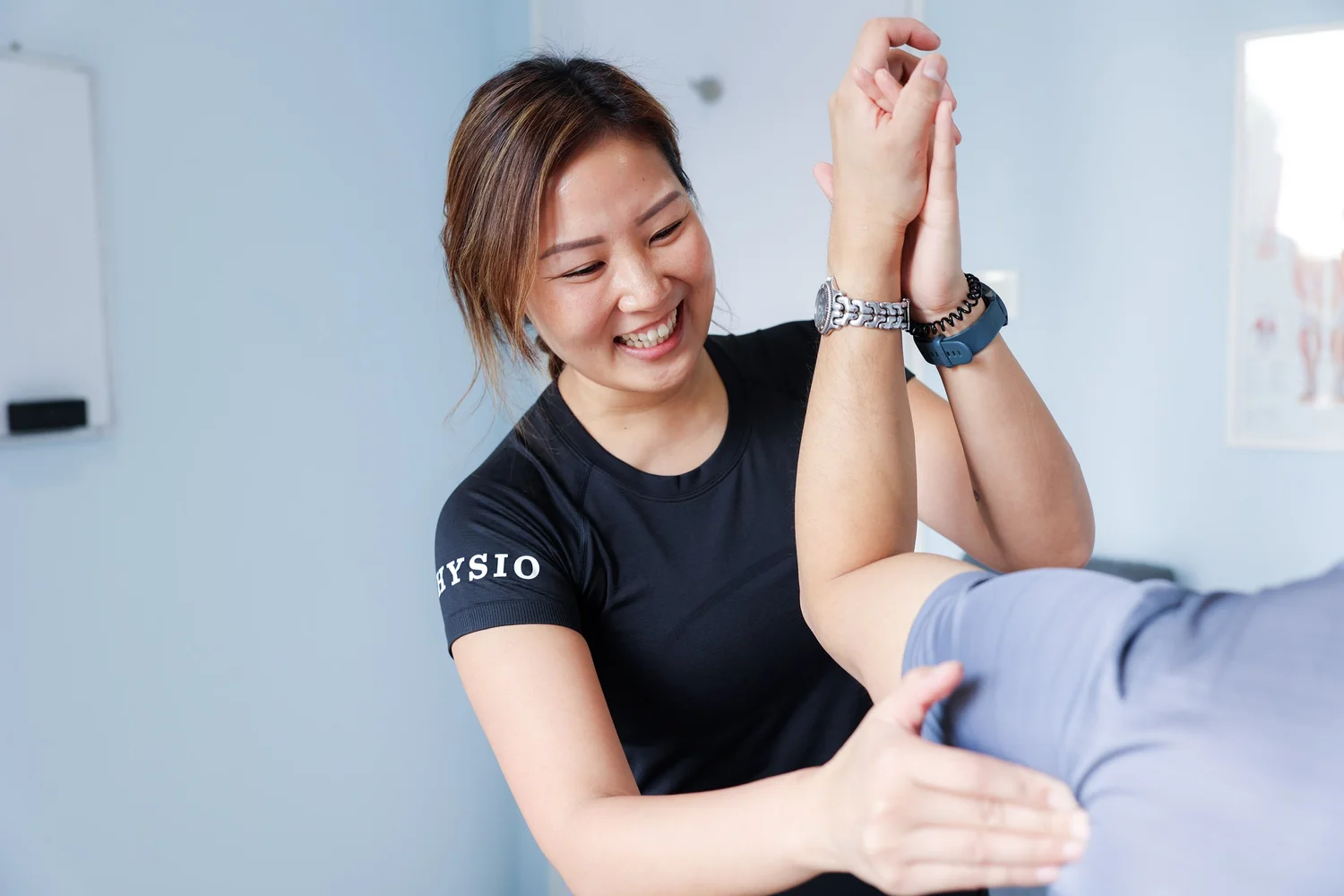
Photo: @shutterlegion
What is return to sport testing?
Return to sport testing is a set of objective checks that show whether an injured area is ready for match or race demands. It replaces guesswork like "it feels fine".
We can use VALD ForceDecks force plates and the VALD DynaMo dynamometer to measure strength, power and left to right differences. Those numbers help guide the decision to return. Players who come back after surgery or a long layoff benefit most.
How do rehab and training work together?
Rehab works best when it flows into training. Once pain settles, our personal trainers rebuild strength, speed and conditioning around your sport. Athletes who want a clear baseline can add metabolic screening at OUE Downtown, with Essential at $295 (75 min) and Elite at $395 (90 min).
Our broader sports injuries and performance rehab page covers running, netball, combat sports and more.
Where can I find a sports injury clinic in the CBD or Orchard?
SCA has two clinics. Both are closed on Sundays.
- OUE Downtown Gallery: 6A Shenton Way, #03-06, Singapore 068815. Mon to Fri 6am to 8pm, Sat 7am to 4pm. See the OUE Downtown clinic.
- COMO Orchard: 30 Bideford Road, Level 4, Singapore 229922, about 5 minutes from Somerset MRT. Mon to Thu 8am to 8pm, Fri 8am to 6pm, Sat 8am to 4pm. See the COMO Orchard clinic.
Our partners include Singapore Wanderers, Raffles Rugby Union, Football Association of Singapore, Singapore Rugby and Singapore Cricket Club, so team sport is part of our everyday work.
Individual outcomes vary, and every plan starts with an assessment.
Key takeaways
- A sports injury clinic treats the injury and rebuilds you for your sport, not just the pain.
- Ankle sprains, hamstring strains, shoulder injuries and knee ligament injuries are common in rugby.
- Return to sport testing gives objective data before you go back to match play.
- SCA has clinics at OUE Downtown and COMO Orchard, with physio and training under one plan.
- Head knocks, suspected fractures and spreading numbness need a doctor first.
Frequently asked questions
What is a sports injury clinic?
A sports injury clinic assesses and treats injuries from training and competition, then guides you back to your sport. Physiotherapists lead care, often alongside strength and conditioning support. SCA combines both under one plan.
Do I need a referral to see a physio at SCA?
. If you are unsure, message us on WhatsApp and we will point you in the right direction.
How long does a hamstring strain take to recover?
It depends on how severe the strain is, and recovery can range from a couple of weeks to several months. A physio assessment gives you a realistic timeline for your case. Progressing gradually helps lower the risk of re-injury.
Can SCA help after ACL or other surgery?
Yes. We offer pre-op and post-surgery rehab, including ACL, joint replacement and soft tissue repair. Your surgeon's guidance always comes first, and we build rehab around it.
What is return to sport testing?
It is a set of objective tests of strength, power, movement and balance that show whether you are ready to return to your sport. SCA uses VALD ForceDecks and the VALD DynaMo as part of this process.
Which SCA clinic should I choose?
Choose OUE Downtown if you work in the CBD and want early or after-work slots, as it opens from 6am on weekdays. Choose COMO Orchard if you live or work near Orchard, about 5 minutes from Somerset MRT. Both clinics offer physiotherapy.
Does SCA support rugby teams?
Yes. Our physiotherapist Donavan looked after Singapore Wanderers at the 77th SCC International Rugby 7s. We also partner with Raffles Rugby Union and Singapore Rugby.
Hurt in training or on the pitch? Book your sports physio assessment on WhatsApp at +65 8878 5539 or send us an enquiry. Strength, For Life.