
Why the best results come from combining physio, personal training, and metabolic data
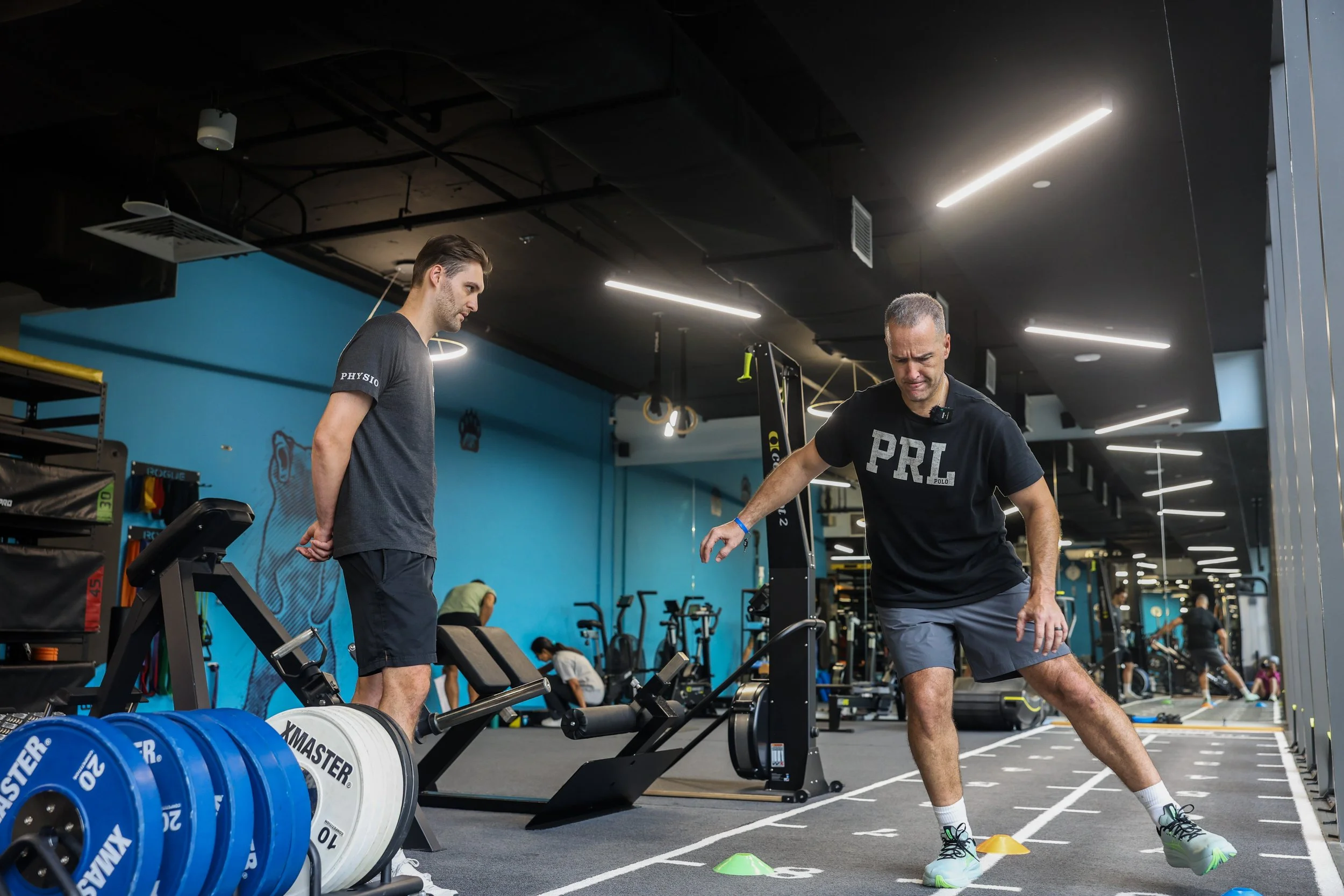
The integration advantage nobody talks about
Most people treat fitness, rehabilitation, and performance as separate categories. You see a physiotherapist for pain. You hire a personal trainer for strength. You track your nutrition randomly and hope your conditioning improves. Each in isolation. Each missing crucial information from the others.
Then you wonder why progress is slow. Why injuries recur. Why you hit plateaus that feel impossible to break through.
The secret that separates fast results from slow progress isn't working harder. It's connecting three things: physiotherapy, personal training and metabolic data. When they work together, they don't just add up. They multiply.
Physio fixes dysfunction. PT builds strength. Metabolic data optimises conditioning. Separately, each is useful. Together, they create a powerful complete system, where every intervention reinforces the others. Recovery speeds up. Progress compounds. Injuries stop recurring.
This is what intelligent, integrated training looks like.
Three services. One system.
Physiotherapy
Identifies dysfunction, movement restrictions, and root causes
Personal Training
Builds strength and resilience on corrected movement patterns
Metabolic Data
Guides conditioning load so progress doesn't outpace recovery
Why separation slows you down
Most people experience this without realising it. You go to physio, get better for a few weeks, then the problem comes back. You start strength training, feel stronger in the gym, but your conditioning remains poor. You track calories but your training doesn't improve because nobody is addressing movement issues.
Each service is doing its job in isolation. But they're missing crucial feedback from each other.
Physio addresses dysfunction but doesn't build the strength required to maintain improvements. PT builds muscle but doesn't correct the movement patterns that caused the original problem. Metabolic data optimises nutrition and conditioning but doesn't account for movement dysfunction that limits your capacity. The pieces never connect.
So you improve temporarily, then regress. You build strength in dysfunctional patterns. You train conditioning without fixing the movement issues holding you back. Each service helps, but none of them solve the actual problem because they're operating independently.
Integration changes everything. When physio, PT, and metabolic data share information, each service becomes infinitely more effective.
How each piece contributes to the whole
Physiotherapy identifies movement dysfunction, joint limitations, and muscular imbalances. It answers the question: what's actually wrong? Without this, strength training reinforces problems instead of fixing them. You can't build proper strength on top of dysfunction. Physio provides the foundation.
Personal training builds strength, power, and muscular endurance in a structured, progressive way. It answers: how do we build resilience? Once physio has identified what needs fixing, PT programs strength specifically targeting those areas. But only works optimally when informed by what a physio has found.
Metabolic data provides objective information about your aerobic capacity, actual daily energy needs, and optimal training zones. It answers: how should we structure conditioning? This prevents overtraining during sensitive rehabilitation phases and ensures conditioning complements strength building instead of compromising recovery.
Together, they answer the complete question: what's wrong, how do we fix it, and how do we ensure sustainable progress without re-injury?
The real cost of separation
Think about what happens when these services operate independently. You go to physio who advises avoiding heavy loading. You go to your trainer who has no idea about the physio guidance and programs heavy squats. You're simultaneously trying to rehabilitate and push intensity. No wonder the injury comes back.
Or your physio fixes your movement, but your personal trainer programs the same exercises that caused the original problem because they don't know what was dysfunctional in the first place. Or you get metabolic testing showing your VO₂ max is low, so you increase conditioning volume, which overloads tissues still healing from physio work.
These scenarios play out constantly. Each service is good. But they're working against each other rather than with each other. The cost: months of wasted effort, re-injuries that could have been prevented, and progress that never compounds.
What integration actually looks like
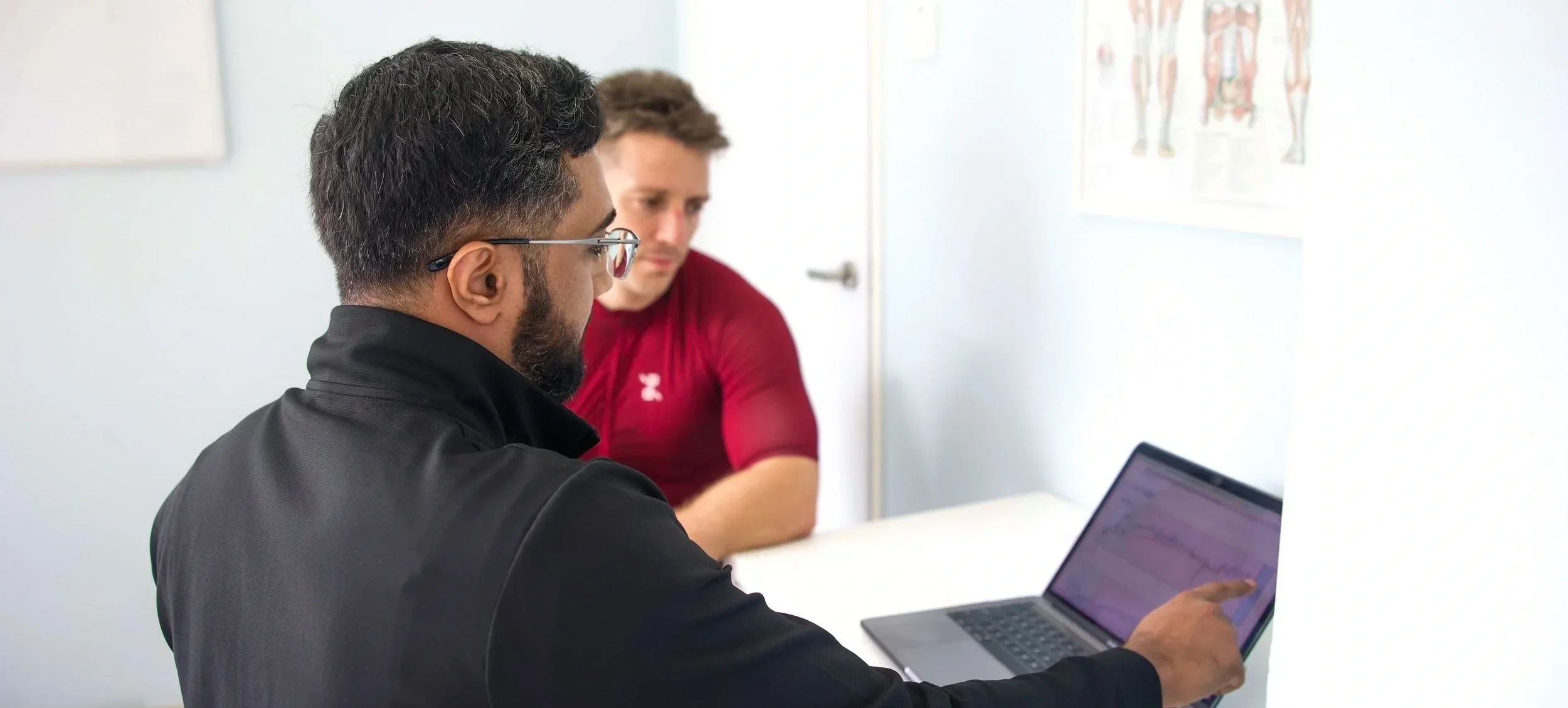
An integrated approach to care means real communication and coordination. Your physiotherapist and trainer aren't working in silos, they're sharing information. Physio says the hip is weak and creates compensation patterns in the lower back. Trainer programs specifically to address hip strength while protecting the lower back. Both are working toward the same goal with complete information.
Metabolic data informs load management throughout the process. Early in rehabilitation, conditioning stays lower intensity while tissues heal. As strength improves and movement patterns normalise, conditioning intensity increases systematically. Training load is never accidental, it's guided by data.
The timeline becomes clear. Weeks 1–4 focus on addressing dysfunction and building foundational strength. Weeks 5–8 introduce more intensive strength work as movement improves. Weeks 9–12 integrate metabolic conditioning as the system becomes resilient enough to handle it. Each phase builds on the previous one. Nothing is wasted. Everything compounds.
Warning signs you need integration
Plateauing despite consistent effort — movement dysfunction is likely limiting your capacity. Strength alone won't fix it. Metabolic optimisation won't fix it. You need physio to identify what's blocking progress.
Recurrent injuries — physio alone may reduce pain, but without strength training the area remains vulnerable. Without metabolic data guiding load, you re-injure during conditioning work.
Poor conditioning despite training hard — movement dysfunction may be limiting your aerobic capacity, or metabolic data isn't being used to structure zones appropriately. Training harder doesn't help if you're training wrong.
Slow progress in any direction — when the three systems align, progress becomes noticeably faster. If it isn't happening, they're probably not aligned.
The mistakes that undermine integration
Treating each service separately. You follow your physio's advice completely, then ignore it when you train. Or your trainer designs a programme without knowing about mobility restrictions. Integration only works if information flows both ways.
Ignoring data. You get metabolic testing but don't structure training around the zones. You get movement assessment but don't program strength to address dysfunctions. Data without application is useless.
Overtraining because services aren't communicating. Your trainer doesn't know physio is managing an injury, so conditioning volume exceeds your recovery capacity. You re-injure. Integration prevents this.
Expecting immediate results. Real integration takes weeks to show obvious benefits. The first few weeks might feel slower because you're addressing root causes instead of chasing quick fixes. Trust the process.
Switching between services instead of committing. Integration only works if you stick with the same physio and trainer long enough for them to understand your situation. Constantly changing services means starting from zero.
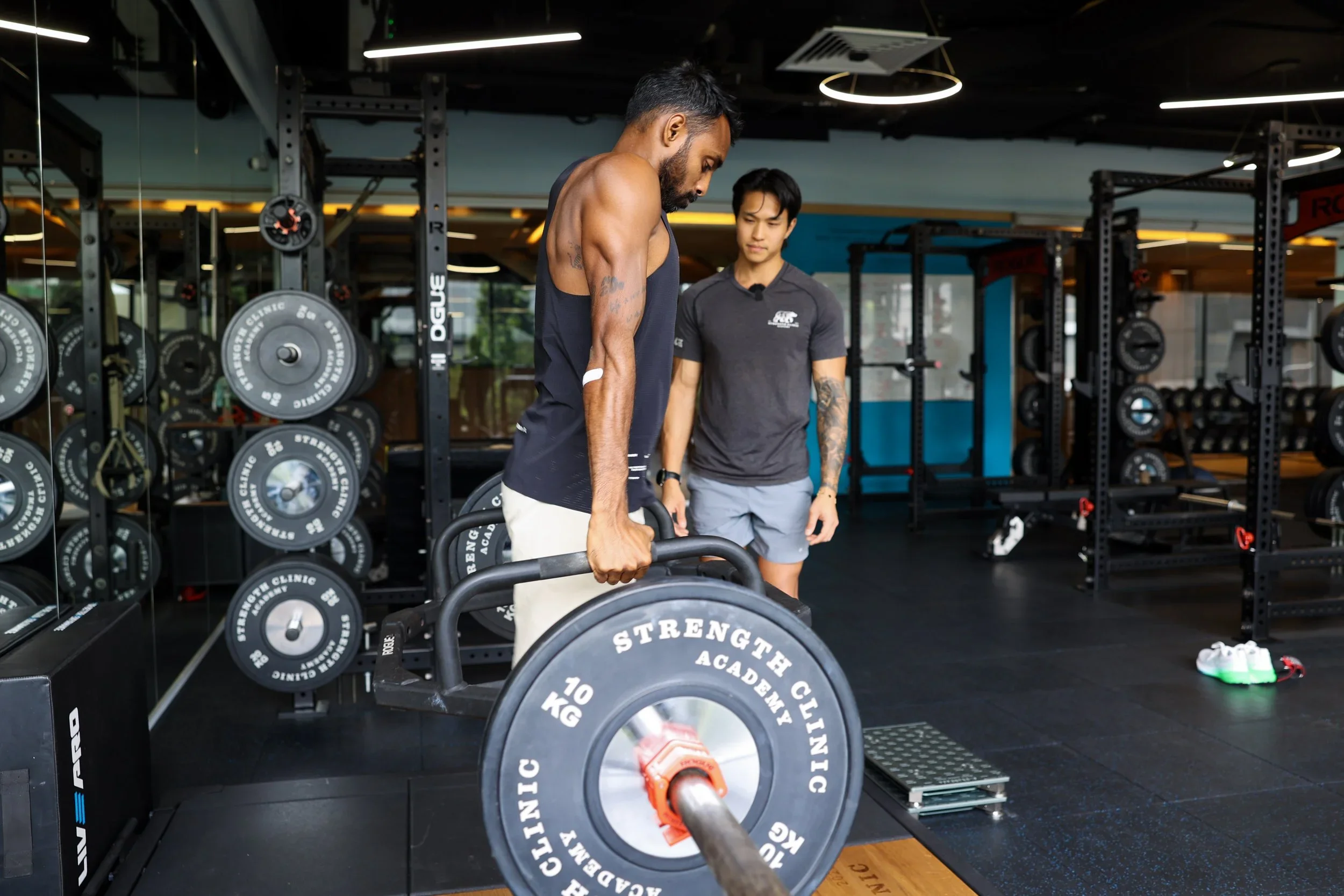
When integration compounds — the timeline
Weeks 1–4: Physio identifies dysfunction. PT establishes baseline strength. Metabolic data sets training zones. Progress is visible but not dramatic. This is about establishing a foundation.
Weeks 5–8: Movement dysfunction decreases. Strength increases as patterns normalise. Conditioning improves as you train in proper zones. Progress becomes noticeably faster.
Weeks 9–12: Movement is efficient. Strength is building rapidly. Conditioning is improving because the system can now handle higher intensity. Results are obvious.
Weeks 12+: The compounding effect is clear. Stronger, more conditioned, pain-free, and moving well. Each system is reinforcing the others. Progress that would have stalled separately continues accelerating.
The difference between integrated and separate care is biggest around weeks 8–12, when the compounding effect becomes undeniable.
How SCA integrates everything
At Strength Clinic Academy, physiotherapy, personal training, and metabolic screening aren't separate services that happen to share a postcode. They are parts of a single system designed to work together.
Initial assessment combines movement analysis, strength testing, and metabolic data collection. We understand your complete picture from day one.
Integrated programming means your physio is aware of what your trainer is doing, and vice versa. If movement dysfunction is limiting strength development, both services address it together. If metabolic data shows conditioning is poor, that informs physio load management and PT intensity.
Regular communication between physio and trainer keeps the programme aligned. If physio discovers new limitations, PT adjusts immediately. If strength improves faster than expected, load management updates accordingly.
Data-driven progression means every decision is informed by testing, not guesswork. When you're ready to advance, you advance. When you need to consolidate, you consolidate. The data tells us.
Integrated care at SCA is available across two Singapore locations — OUE Downtown, 6A Shenton Way, #03-06 (physiotherapy, personal training, and metabolic screening) and COMO Orchard, 30 Bideford Road, Level 4 (physiotherapy).
Ready to train smarter?
Whether you're recovering from injury, chasing performance, or just want to stop spinning your wheels, integrated care gets you there faster. Start with a comprehensive assessment covering movement, strength, and metabolic data. Then get coached by a team where physio and PT work together, guided by objective data.
Get started → WhatsApp +65 8878 5539 | info@strengthclinicacademy.com
Not sure where to start? Chat with us. We'll assess your situation and explain exactly how integration accelerates your results.
Frequently asked questions about integrated care at SCA
What does integrated care actually mean at SCA?
It means your physiotherapist, personal trainer, and performance coach share information and build your programme together, rather than operating in separate silos. Your physio findings directly inform your PT programme. Your metabolic data informs training load and conditioning intensity across both services. Every intervention is aware of what the others are doing.
Do I need to use all three services — physio, PT, and metabolic screening?
Not necessarily. The right combination depends on your goals and starting point. Some clients begin with physio and PT. Others start with metabolic screening and PT. The value of integration grows the more services align, but even two services working together produces better outcomes than one in isolation. We'll recommend the right starting point based on your assessment.
I'm not injured — do I still benefit from integrated care?
Yes. Integration isn't only for rehabilitation. Even without injury, most people have movement restrictions, strength imbalances, or conditioning inefficiencies that limit their progress. Identifying these early and addressing them through coordinated physio, PT, and metabolic data produces results that standalone training simply can't match.
Where is integrated care available at SCA?
Personal training, physiotherapy, and metabolic screening are all available at OUE Downtown, 6A Shenton Way, #03-06, Singapore. Physiotherapy is also available at COMO Orchard, 30 Bideford Road, Level 4, Singapore. Both locations offer direct booking with no referral required.
How do I get started?
The best starting point is a comprehensive assessment covering movement quality, strength, and where relevant, metabolic data. From there, we build a plan that connects the right services for your goals. You can book directly via WhatsApp at +65 8878 5539 or email info@strengthclinicacademy.com