
From Desk to Strong: Fixing Desk-Job Back and Neck Pain
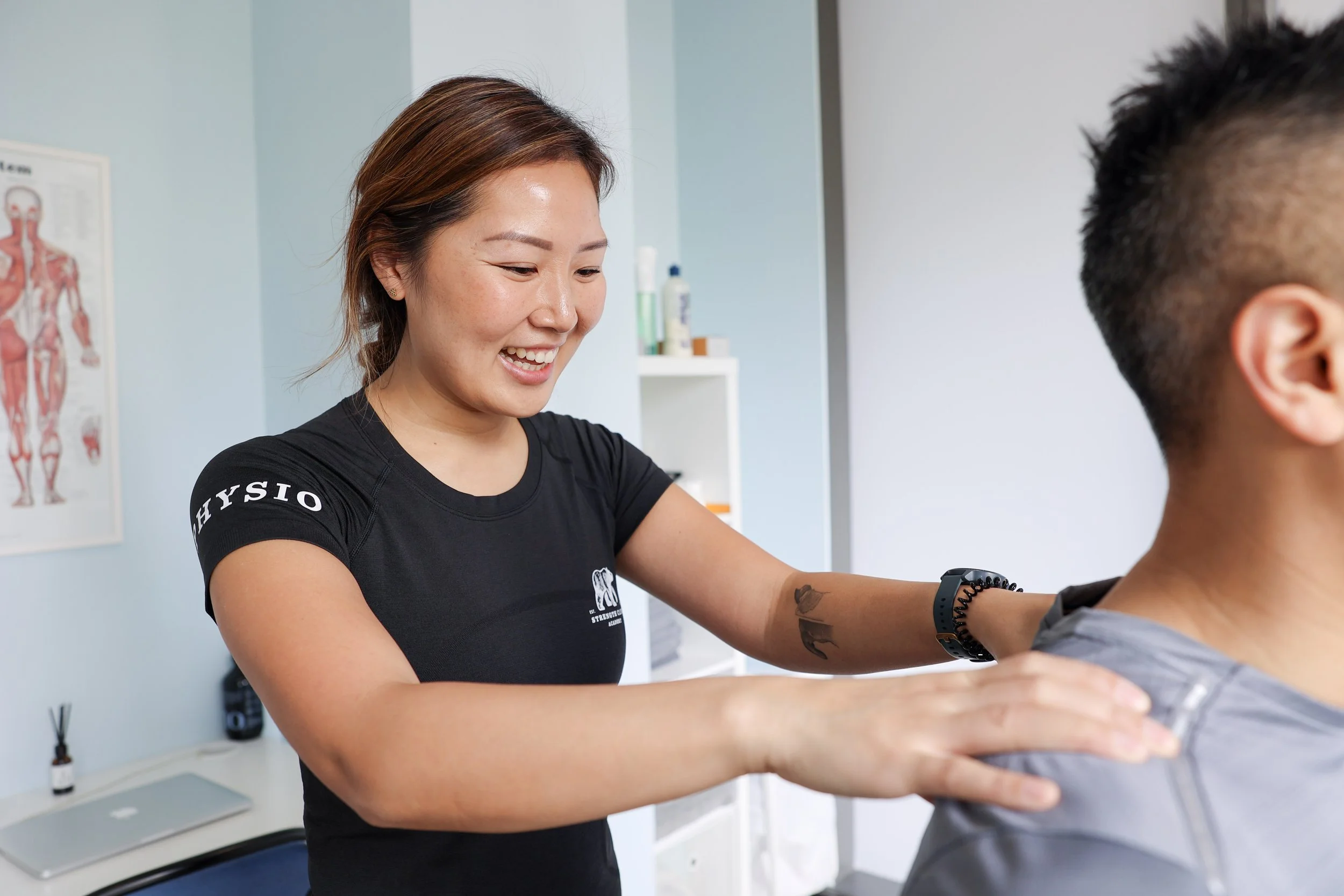
It starts as a dull ache by mid-afternoon. A stiff neck after a long run of calls. A lower back that complains when you finally stand up. You stretch, you shift in your chair, and tomorrow it's back.
Desk-job pain is one of the most common reasons CBD professionals walk through our doors. The good news: it's very treatable, and the fix is usually more movement and more strength, not less.
Quick answer: Desk-job back and neck pain usually builds from long hours in one position and a body that isn't strong enough for the load of the day. A physiotherapist can assess and treat the pain, then strength training builds the capacity to keep it away. At Strength Clinic Academy, physiotherapists and personal trainers work together in one space at OUE Downtown in the CBD.
The most common desk-job aches
Stiffness or aching after long stretches of sitting, often worse when you first stand up.
Tightness that builds through the day, especially during screen-heavy weeks.
A stiff, achy feeling between the shoulder blades.
Tight, stiff hips from spending most of the day seated.
Why it happens (it's not just bad posture)
Posture often gets the blame, but there's no single perfect way to sit. The bigger issues are usually:
Staying still too long. Any position becomes uncomfortable if you hold it for hours. Your body is built to move.
Low strength and capacity. When the muscles supporting your back, neck and shoulders aren't strong enough for your day, they tire and ache sooner.
Weekend spikes. Five days at a desk, then a big Saturday of sport or a long run. The jump in load can tip a niggle into pain.
Quick desk resets you can start today
- Change position often. Aim to stand up or shift position every 30 to 60 minutes.
- Walk when you can. Take calls on your feet, use the stairs, or walk to a colleague instead of messaging.
- Set up your screen. Keep it roughly at eye level and arm's length away, so you're not craning forward.
- Move through your range. Gentle shoulder rolls, neck turns and standing hip stretches through the day help ease stiffness.
These help, but they won't fix pain that keeps coming back. That's where strength comes in.
When to see a physiotherapist
Book an assessment if your pain lingers for more than a couple of weeks, keeps returning, affects your work or sleep, spreads into your arms or legs, or comes with numbness or tingling. If pain follows a fall or accident, or comes with weakness or fever, see a doctor promptly.
How SCA fixes desk-job pain: physio and training in one space
At SCA, physiotherapy and personal training are distinct disciplines that work together at OUE Downtown. Your physio and coach share one plan, so you move from pain relief to lasting strength without starting over.
Your physiotherapist assesses what's driving the pain and treats it with hands-on care and targeted exercise.
Your coach builds strength in your back, shoulders, hips and core, so your body can handle long workdays.
You get back to sport, travel and life without the daily ache.
Personal training is optional. Many clients start with physiotherapy only, then add training once they're ready.
What the research says
Strength helps neck pain. A Cochrane review found evidence that strengthening exercises for the neck, shoulders and upper back can reduce pain in people with chronic neck pain.
Gross et al., Cochrane Database of Systematic Reviews, 2015
Exercise helps back pain. A separate Cochrane review found exercise therapy probably reduces pain in people with chronic low back pain.
Hayden et al., Cochrane Database of Systematic Reviews, 2021
Start with the Experience Pack
S$388
Usually S$776. Save 50%. For first-time clients.
Includes a 30-minute health assessment, three 60-minute personal training sessions, and your choice of a physiotherapy session (30 min), nutrition consultation (45 min) or metabolic review (30 min). Dealing with desk-job pain? Choose the physiotherapy session.
Frequently asked questions
Can physiotherapy help with back pain from sitting?
Yes. A physiotherapist can assess what's driving your pain, treat it, and give you exercises to build strength so it's less likely to return.
Is sitting bad for my back?
Sitting itself isn't harmful, but staying in any one position for hours can lead to stiffness and aching. Changing position regularly and building strength both help.
Will a standing desk fix my back pain?
A standing desk can help you vary your position, but standing all day isn't the answer either. Moving between positions and building strength matter more than any single setup.
Should I see a physio or a personal trainer for desk-job pain?
If you're in pain, start with a physiotherapist. Once the pain settles, a personal trainer can build the strength to keep it away. At SCA, both work together in one space at OUE Downtown.
Where can I get physiotherapy in the CBD?
Strength Clinic Academy offers physiotherapy and personal training at OUE Downtown, 6A Shenton Way, #03-06, Singapore 068815. Physiotherapy is also available at COMO Orchard, 30 Bideford Road, Level 4.
Stop working around the ache
Book an assessment at OUE Downtown and get a plan to fix desk-job pain for good, steps from your office.
WhatsApp +65 8878 5539 | Call 6904 9537 | info@strengthclinicacademy.com
Repair. Build. Perform. Strength, for life.
More reading: Personal Trainer in the CBD: Train Steps from Your Office and Physiotherapist or Personal Trainer? How to Know Which You Need.
Sources
- Gross A, Kay TM, Paquin JP, et al. Exercises for mechanical neck disorders. Cochrane Database Syst Rev. 2015;1:CD004250.
- Hayden JA, Ellis J, Ogilvie R, Malmivaara A, van Tulder MW. Exercise therapy for chronic low back pain. Cochrane Database Syst Rev. 2021;9:CD009790.