
Why everyone needs a strength baseline assessment
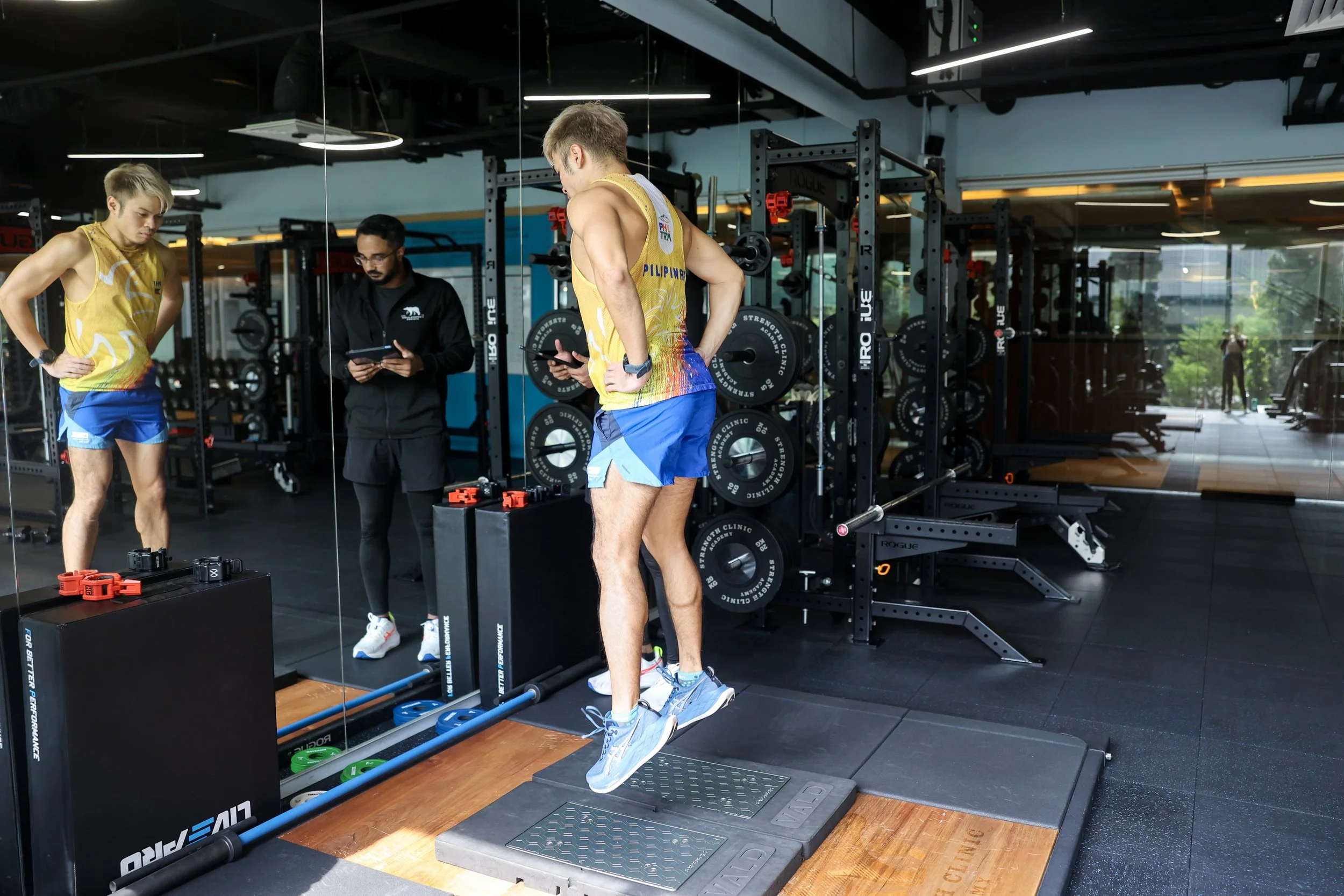
You can't improve what you don't measure
Here's a fundamental truth about improvement: it requires measurement. You can't know if you're getting stronger without knowing where you started. You can't identify imbalances without objective data. You can't build a smart training programme without understanding your actual capabilities.
Yet most people train completely blind. They guess at their strength levels. They assume their left and right sides are balanced. They follow generic templates instead of building from personal data. Then they wonder why progress stalls and injuries keep recurring.
A strength baseline changes everything. It answers the questions that matter: where are you actually strong, where are you weak, what imbalances exist, and how does your current capacity match what your goals require? With this information, training becomes intelligent. Without it, it's guesswork.
Strength imbalances are the hidden cause of most injuries. A weak shoulder rotator cuff. Underdeveloped hip stabilisers. A 15% left-right difference in leg strength. None of these feel noticeable while you're training, but they create compensation patterns, increase injury risk and limit performance. A baseline assessment reveals all of this before it becomes a problem.
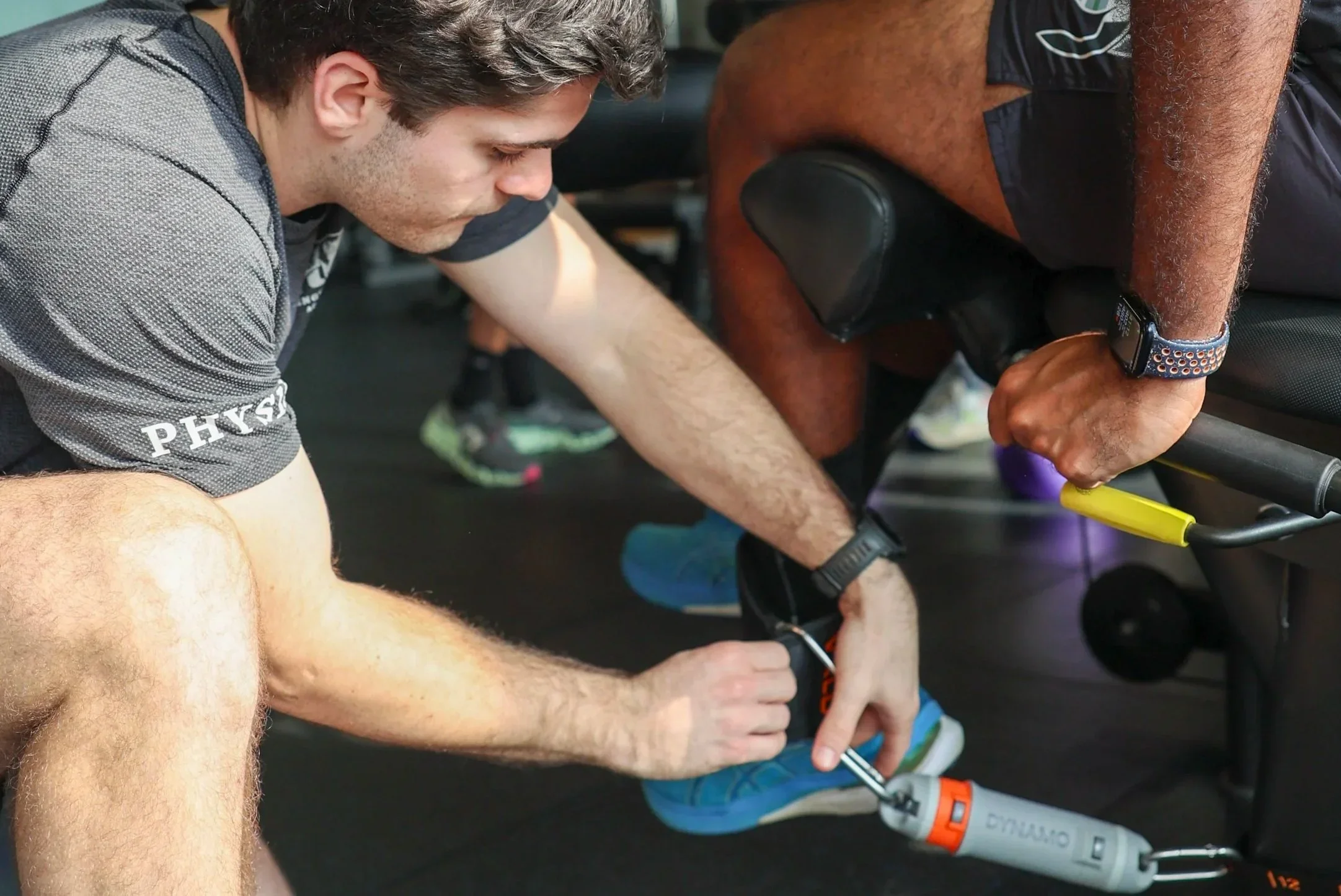
Why strength imbalances matter more than you think
Most people don't feel weak until it's too late. A 15% strength difference between sides doesn't feel noticeable during training. But it absolutely affects movement quality and injury risk.
If your right hip is 15% weaker than your left, your body compensates. Your left hip works harder. Your lower back takes extra load. Your knee angle shifts slightly to protect the weak side. None of this hurts initially. But over time, these compensation patterns create pain, injuries develop, and performance suffers.
The problem is that compensation patterns feel normal because they develop gradually. You don't notice the imbalance because your body has already adapted to it. You only notice the consequences when the system breaks down.
For people in personal training or strength and conditioning programmes, this matters especially. You can train consistently for months and still be reinforcing imbalances, building strength in all the wrong places, simply because nobody measured where the problem was to begin with.
What a strength baseline actually reveals
Absolute strength
Maximum force production gives you a true benchmark to measure future progress against, not a subjective sense of "feeling stronger".
Left-right asymmetries
Identifies meaningful force differences between sides. Asymmetries above 10-15% significantly increase injury risk and limit performance.
Strength ratios
Shows whether stabilising muscles (rotator cuff, hip abductors, glutes) are strong relative to prime movers. Weak stabilisers drive most overuse injuries.
Movement-specific output
Force production across different movement planes. You may be strong in one pattern but weak in another. Gaps the baseline makes visible.
How baselines guide smarter personal training
Without a baseline, programming is guesswork. You don't know whether to focus on building absolute strength, correcting imbalances, or addressing weak movement patterns.
With a baseline, programming becomes targeted. If testing reveals a 17% left-right imbalance in hip abductors, your programme addresses that specifically, not as an afterthought, but as a primary focus because the data shows it matters. If your rotator cuff is weak relative to your chest strength, shoulder stabiliser work becomes a priority. If lower-body asymmetry exists, single-leg training moves to the front of the programme.
This targeted approach produces faster results. Every session is moving toward fixing real imbalances rather than hoping general training eventually covers the gaps. Baselines also give you objective progress tracking. Not how you feel, not how much you lifted, but actual changes in force production. That's more reliable, and significantly more motivating, than subjective feedback.
At Strength Clinic Academy, strength baseline testing is integrated directly into our personal training and strength and conditioning service at OUE Downtown. Your coach uses your VALD data to build and adjust your programme, not to give you a number, but to make every session smarter.
Warning signs you should get tested
Recurrent injuries in the same area — you're likely re-injuring because the underlying strength deficit was never properly addressed in the original rehab.
Persistent weakness in a specific muscle group — often subtle. A 10–15% deficit doesn't feel obvious until it causes a problem. A baseline catches it early.
Performance plateaus despite consistent training — strength imbalances may be the limiting factor. A baseline reveals whether deficits are holding you back.
Movement that feels asymmetrical — one side stronger, more coordinated, or more stable. Even without injury, asymmetry increases future risk and limits results.
Starting a new personal training or S&C programme — building from a data baseline from day one means every phase of your programme is targeted from the start.
What you can do right now
You don't need formal testing to start paying attention to your body's signals.
Track your unilateral exercises — note which side feels stronger, slower to recover, or less stable during single-leg and single-arm work. These are early clues about imbalances.
Film your movements — record your squats, lunges, and pressing patterns. Watch for weight shifts, asymmetrical ranges, or one side moving differently from the other.
Include stabiliser work — don't just train the main lifts. Shoulder stabilisers, hip abductors, and core control exercises build the balance that heavy compound movements can miss.
Notice what you avoid — the exercises that feel awkward or weak on one side are usually pointing directly at the imbalances worth testing.
Formal baseline testing will confirm what you've started to observe and give you the objective numbers to build a programme from.
The mistakes that hide strength problems
Guessing strength levels. You feel balanced because you feel okay. VALD testing regularly reveals asymmetries people had no idea existed. Guessing is unreliable. Testing is definitive.
Ignoring known weaknesses. You know your right shoulder is weaker but plan to deal with it eventually. Meanwhile, compensation patterns develop and injury risk climbs. Weaknesses don't self-correct without targeted training.
Only training what you're good at. Most people unconsciously emphasise their stronger side, which widens imbalances over time. A baseline forces you to address weak areas because the data shows they matter.
Using generic programmes. Templates don't account for your individual imbalances and deficits. A programme built on baseline data is significantly more effective than one built on assumptions.
Not retesting. A baseline is only valuable if you measure again later. Retest every 12-16 weeks to confirm progress and adjust your programme accordingly.
The timeline that makes baseline testing obvious
WITH BASELINE TESTING
Week 1: Complete strength and imbalance data collected. Programme built specifically around your findings.
Weeks 1–4: Targeted training addresses specific weaknesses and asymmetries. Visible progress from the first block.
Weeks 4–8: Imbalances begin correcting. Weak areas are getting stronger. Movement quality improves measurably.
Week 8+: Retest confirms progress. Next programme block is even more targeted based on updated data.
WITHOUT BASELINE TESTING
Weeks 1–4: General training. Some progress, some plateaus. Real limiting factors unknown.
Weeks 4–8: Progress slows. Imbalances persist because they were never identified. You're not sure what to fix.
Weeks 8+: Frustration. Programme switching. The real issues were never addressed because nobody measured them.
How SCA uses baseline testing in personal training
A strength baseline at SCA isn't a standalone test, it's the foundation your personal training or strength and conditioning programme is built on.
VALD testing measures force production across multiple movement patterns, both sides, multiple muscle groups, and different movement planes. Alongside the data, your coach observes how you move during assessments, identifying compensations and restrictions that raw numbers alone might not capture.
The findings directly shape your programme. Not generally, and not eventually, but from session one. Your coach knows which muscle groups to prioritise, which imbalances to correct, and how to structure progression so you're building strength in the right places from the start.
Retesting every 12-16 weeks confirms what's improved and guides the next training block. You're never guessing whether you're making progress…you're measuring it.
Strength baseline assessments and VALD testing are available as part of SCA's personal training and strength and conditioning service at OUE Downtown, 6A Shenton Way, #03-06, Singapore.
Start training with a clear picture of where you stand
The Experience Pack (SCA's starting point for all new personal training clients) includes a comprehensive health assessment, VALD strength and power testing, body composition via EVOLT, and three tailored personal training sessions. It gives you the baseline data and the coaching to act on it, before you commit to an ongoing programme.
Book the Experience Pack → WhatsApp +65 8878 5539 | info@strengthclinicacademy.com
Want to know more about what's included? Chat with us and we'll walk you through it.
Frequently asked questions about strength baseline assessment
What is a strength baseline assessment?
A strength baseline assessment measures your current force production, left-right symmetry, and movement-specific strength using objective testing equipment. At SCA, this is done using common gym exercises, VALD ForceDecks and DynaMo (the same tools used in professional sport). The results form the data foundation your personal training programme is built on.
Do I need to be advanced or athletic to benefit from baseline testing?
Not at all. Baseline testing is valuable at every level. For beginners, it sets a clear starting point and removes guesswork from early programming. For experienced gym-goers, it reveals imbalances and deficits that years of training may have missed or even created. The data is useful regardless of where you are starting from.
What does VALD testing measure?
VALD ForceDecks measure force production, power output, and left-right asymmetry during movements like squats and jumps. VALD DynaMo measures strength and range of motion across specific muscle groups. Together they give a comprehensive picture of how your body produces force, where imbalances exist, and which muscle groups need targeted attention.
How is baseline testing different from a standard gym assessment?
Most gym assessments involve observation and basic movement screens. VALD testing measures actual force output in kilograms and Newtons. Objective, repeatable, and comparable over time. It removes subjectivity from the assessment process and gives your coach data they can programme from with precision.
How often should I retest?
Every 12-16 weeks is the recommended interval for most clients. This gives enough time for meaningful strength changes to occur, while keeping the programme updated with current data. Your coach at SCA will recommend a retesting schedule based on your goals and training block structure.
Is strength baseline testing included in personal training at SCA?
Yes. VALD strength and power testing is part of the SCA Experience Pack — the starting point for all new personal training clients at OUE Downtown. It means your programme is built on data from day one, not generic assumptions about where you should start.
Where is strength baseline testing available in Singapore?
Strength baseline testing using VALD equipment is available at Strength Clinic Academy, OUE Downtown, 6A Shenton Way, #03-06, Singapore. It is accessed through the Experience Pack or as part of an ongoing personal training programme.