
Food Decoded: Your Protein Bar Might Be a Candy Bar
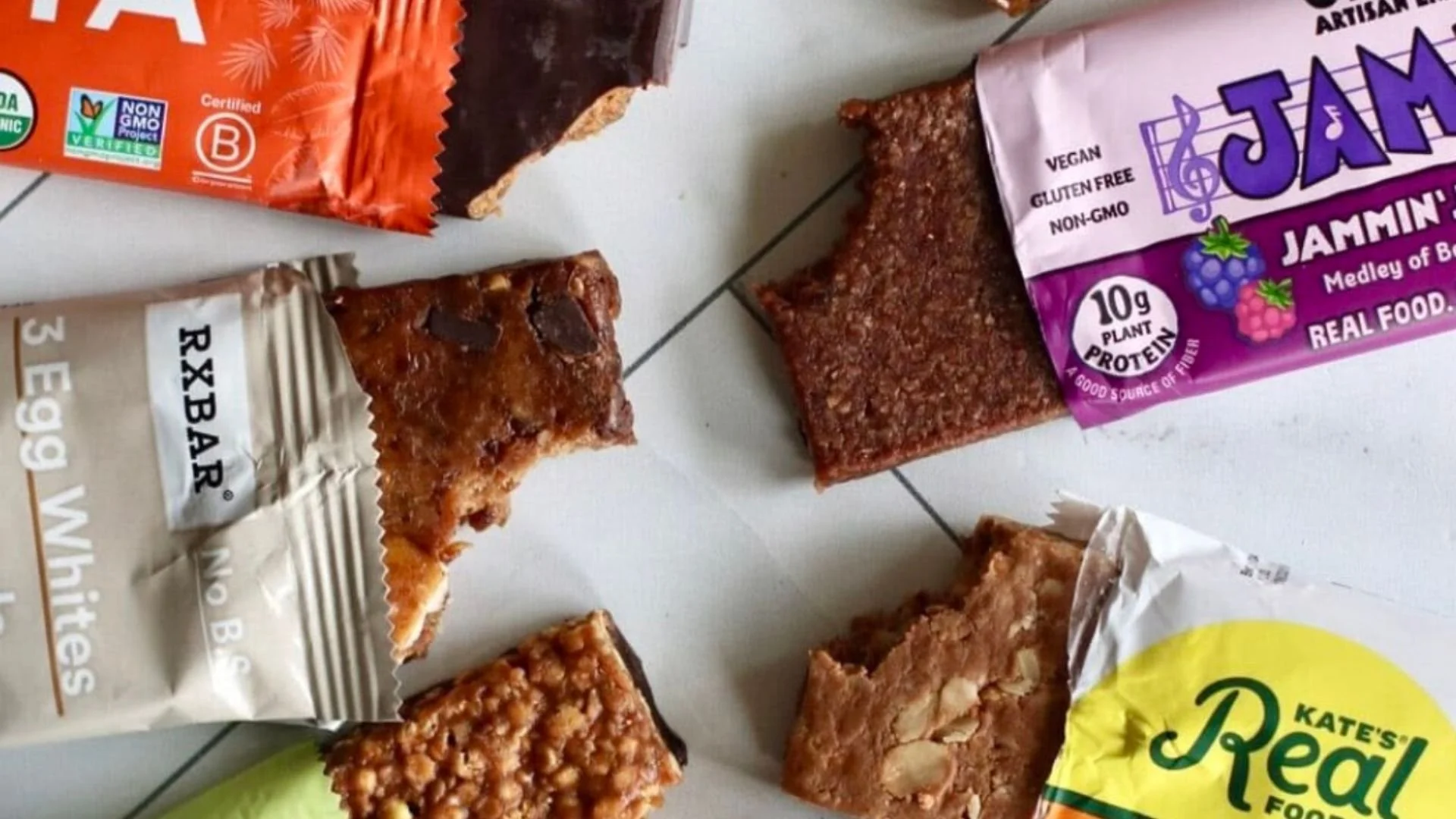
"High protein. Fuel. Power. Clean." The wrapper does a great job of selling it. But some protein bars are a genuinely solid snack, and others are a chocolate bar with protein added. You can't tell from the front.
Here's how to tell a real protein snack from a sweet in disguise, in about 10 seconds.
Quick answer: To check if a protein bar is healthy, flip it over. Look at sugar and saturated fat per 100g (low is 5g or less sugar and 1.5g or less saturated fat), check protein per bar (aim for about 20g), and read the first ingredient. If it's a coating or a syrup, that's mostly what you're eating. You can hit your protein needs with real food, so treat a bar as a backup plan, not the main plan.
The protein halo: the front sells it, the label explains it
High protein. Fuel. Power. Clean.
Chocolate coating. Syrups. Sugar alcohols.
A "protein" claim on the front makes a snack feel healthier than it might be. The back of the pack tells the real story.
How much protein do you need?
If you train, protein matters. But it adds up across the whole day, not in one bar.
The good news: you can hit this with food. A bar is a convenience, not a requirement.
International Society of Sports Nutrition position stand, 2017.
Step 1: check 3 numbers on the nutrition panel
Use the "per 100g" column for sugar and saturated fat, so you can compare bars fairly.
| Per 100g | Low | High |
|---|---|---|
| Sugar | 5g or less | Over 22.5g |
| Saturated fat | 1.5g or less | Over 5g |
High sugar and high saturated fat? That's a chocolate bar with a gym membership.
Thresholds from UK NHS food label guidance.
Step 2: look at the first ingredient
Ingredients are listed from most to least. The first ingredient is what the bar contains the most of. If it's a coating or a syrup, that's mostly what you're eating.
Maltitol, sorbitol and other sugar alcohols. In larger amounts they can cause bloating, gas and an upset stomach. Not what you want before a session.
Put to the test: we checked 2 real bars from the shelf
| Bar A | Bar B | |
|---|---|---|
| Sugar / 100g | 4g Low | 2.7g Low |
| Sat fat / 100g | 8g High | 6.3g High |
| Protein / bar | 15g | 20g |
| 1st ingredient | Milk protein | Milk protein |
| Sweetener | Maltitol | Maltitol |
| Collagen | Lower down | 3rd ingredient |
A note on collagen: collagen counts towards the protein number on the label, but it's an incomplete protein and low in the amino acids that drive muscle building. The higher it sits on the ingredients list, the less useful that protein is for training.
Real-food protein: no wrapper, no maltitol
Mix and match to hit the 20 to 40g range.
Approximate values from USDA nutrient data.
Bar or real food? A good bar has its place

- You're travelling or commuting
- Your next meal is hours away
- You're between back-to-back sessions
- You're at home or near a kitchen
- A meal is coming up soon
- It's becoming a daily habit
A backup plan, not the main plan.
Read the label, not the wrapper
The best protein snack is the one that fuels you, not just sells to you.
Sugar and saturated fat per 100g first.
Coating or syrup? Put it back.
Keep the bar for when life gets busy.
Not sure how much protein you need?
At Strength Clinic Academy, nutritionists work alongside our physiotherapists and personal trainers, so your nutrition matches your training, body and goals.
S$388
The Experience Pack, usually S$776. For first-time clients.
Includes a 30-minute health assessment, three 60-minute personal training sessions, and your choice of a nutrition consultation (45 min), metabolic review (30 min) or physiotherapy session (30 min).
Frequently asked questions
Are protein bars healthy?
Some are a solid snack, others are closer to a chocolate bar with protein added. Check sugar and saturated fat per 100g, protein per bar, and the first ingredient before you decide.
How much protein should a good protein bar have?
Aim for around 20g of protein per bar. Research suggests 20 to 40g per meal or snack works well for active people.
How much protein do I need a day if I train?
The International Society of Sports Nutrition recommends 1.4 to 2g of protein per kg of body weight a day for active people, spread across meals every 3 to 4 hours.
What is maltitol and is it bad for you?
Maltitol is a sugar alcohol used to sweeten "no added sugar" products. It's safe, but in larger amounts it can cause bloating, gas and an upset stomach.
What are the best real-food protein snacks?
Plain Greek yoghurt (about 20g per 200g pot), two boiled eggs (about 12g), edamame (about 12g per 100g), cottage cheese (about 11g per 100g), or milk with a handful of peanuts (about 15g).
Fuel that matches your training
Get nutrition advice built around how you train, recover and live, from a team that works together in one space.
WhatsApp +65 8878 5539 | info@strengthclinicacademy.com
Repair. Build. Perform. Strength, for life.
More from Food Decoded: Part 1: Palm oil, your body and the haze and Part 2: Not all processed food is bad.
Sources
- Jäger R, et al. International Society of Sports Nutrition position stand: protein and exercise. J Int Soc Sports Nutr. 2017;14:20.
- NHS. Food labels: how to read them.
- US Department of Agriculture. FoodData Central (approximate values).