
1-1 Pilates at SCA: Intelligent Movement for Strength, Control and Longevity
Ask most people what they think Pilates is, and you’ll hear something like: “Oh, it’s that stretching class, right?” or “Isn’t that what dancers do?” It’s one of the most misunderstood disciplines in the movement world and that misunderstanding means a lot of people are missing out on something genuinely transformative.
Pilates is not stretching. It is not a gentle warm-up. At its core, it is intelligent strength training. A system built around precision, control, and the kind of deep muscular stability that most conventional gym programmes completely overlook. When done properly, it builds resilience from the inside out, improves the quality of every movement you make, and creates a foundation that supports both performance and longevity.
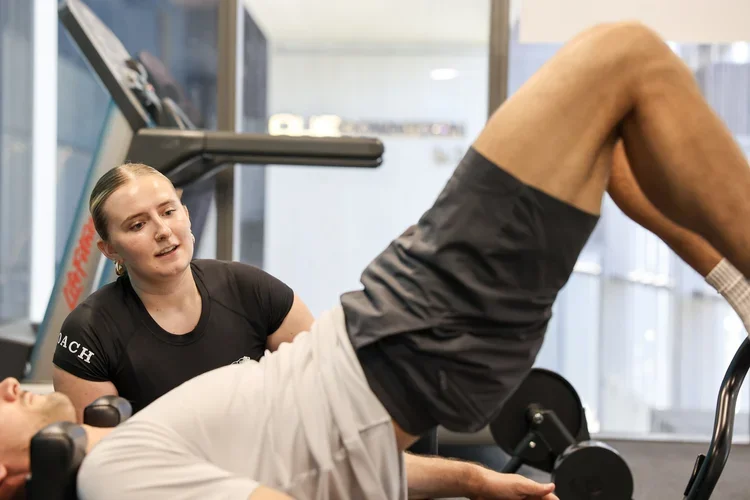
At SCA’s OUE Downtown clinic, Coach Poppy delivers 1-1 Pilates sessions that go far beyond what any group class can offer. The difference is enormous and it changes everything about the results you get.
What Pilates Is Actually Doing to Your Body
Most exercise focuses on the global muscles (the large, powerful movers like your glutes, quads, and lats). Pilates goes deeper than that.
Deep stabilisers (including the transversus abdominis, multifidus, pelvic floor, and deep hip rotators) are the muscles responsible for controlling and protecting your joints before and during movement. Think of them as the scaffolding behind every action your body takes. When they’re weak or poorly coordinated, your body compensates by overloading the larger muscles and that’s often where pain, stiffness, and injury begin.
Pilates directly targets and trains this stabilising system. Over time, it improves movement quality at a fundamental level: not just how strong you are, but how well your nervous system coordinates movement. The result is better posture, more efficient mechanics, and a body that moves with control rather than brute force.
Posture and control are two sides of the same coin. Pilates builds the endurance and awareness in the postural muscles to hold your body in optimal alignment, not just during exercise, but throughout everyday life: sitting, walking, carrying, standing.
Two Persistent Pilates Myths — Cleared Up
Myth 1: Pilates is easy. This one tends to disappear after the first session with Coach Poppy. When performed correctly (with full attention to alignment and muscular engagement) Pilates is genuinely challenging. Holding a perfect plank while maintaining pelvic neutral and controlled breathing will humble anyone.
Myth 2: Pilates is just for flexibility. Flexibility is a byproduct of Pilates, but it is emphatically not the goal. The primary aim is strength, specifically, functional strength through full ranges of motion. That’s a meaningfully different thing from passive stretching.
Signs Your Body Might Be Telling You Something
You don’t need to be in acute pain to benefit from Pilates. Some of the people who need it most are those experiencing subtle signs that their movement foundations aren’t as solid as they could be:
Poor posture: rounded shoulders, a forward head position, or a flattened lower back. All signs of postural muscle weakness and poor neuromuscular control
A weak or disconnected core: difficulty engaging your abdominals independently of your hip flexors, or feeling unstable during single-leg activities
Recurring back pain: particularly the kind that comes and goes, or flares up with extended sitting, standing, or lifting
Movement compensations: favouring one side, hitching your hip when you walk, or noticing asymmetry under load
These patterns rarely resolve on their own. Left unaddressed, they tend to become the foundation for more significant problems down the track.
Where Strength and Pilates Meet
This is where the SCA approach becomes particularly powerful. Pilates on its own is excellent. Pilates integrated with strengthening is something else entirely.
When a coach designs your Pilates programme, every exercise is chosen with clinical intent. It’s not a menu of popular movements, it’s a targeted prescription based on what your body specifically needs. Movement patterns are assessed, weaknesses are identified, and the programme is built to correct them in a logical, progressive sequence.
Correcting movement patterns is central to this process. Many people have deeply ingrained compensation strategies/ways their body has learned to “get through” movement despite underlying dysfunction. Without identifying and retraining these patterns, exercise can reinforce the problem rather than solve it. A session with Coach Poppy catches and corrects this in real time.
Building foundational strength is the long-term goal. Think of it as constructing a building: you cannot add floors to a structure with a compromised foundation. Strength-integrated Pilates builds that foundation — and once it’s solid, everything else (gym training, sport, daily activity) becomes more effective and less injury-prone.
Three Things You Can Start Today
You don’t need equipment or a studio to begin improving your movement foundations. These three starting points form the basis of good Pilates practice:
Core Activation
Lying on your back with knees bent, gently draw your lower abdomen inward, not by sucking in your stomach or holding your breath, but by lightly engaging the deep abdominal wall. Hold for 10 seconds while breathing normally. This is the foundational movement of Pilates, and most people are surprised by how challenging it is to do correctly.
Breathing Mechanics
Pilates uses lateral (“3D”) breathing into the sides and back of the ribcage rather than raising your chest. Practise by placing your hands on the sides of your ribcage and breathing so your hands move outward. Good breathing mechanics improve intra-abdominal pressure management and are central to spinal stability.
Thoracic Spine Mobility
Seated rotations, cat-cow movements, and extension over a foam roller are excellent starting points. A mobile thoracic spine takes load off both the neck and lower back, and improves the quality of virtually every Pilates exercise that follows.
Mistakes That Undermine Your Progress
Generic group classes are fine for general fitness, but they’re not designed with your body’s specific needs in mind. When a class is moving at one pace for twenty people, individual dysfunctions go unnoticed, compensations go uncorrected, and people often spend weeks practising movements incorrectly.
Moving too fast eliminates the neurological demand that makes Pilates effective. Rushing through repetitions to “get them done” is the fastest way to undermine what the exercise is trying to achieve.
Not focusing on control ties it all together. The goal of every Pilates exercise is not to complete the rep, it’s to complete the rep well, with the right muscles working, in the right sequence, without compensating elsewhere. This is something a 1-1 session with Coach Poppy can monitor and reinforce; a group class largely cannot.
How Quickly Will You Notice a Difference?
Most people notice meaningful changes within 4 to 6 weeks of consistent, well-structured Pilates. Particularly in core endurance, postural awareness, and day-to-day comfort. The body’s neuromuscular system adapts relatively quickly when training is precise and progressive.
The deeper benefits (the ones that protect your joints and support longevity) build over months, not weeks. The clients who get the most out of working with Coach Poppy are those who commit to it as a long-term investment in how their body functions, not just a short-term fix.
When a Physiotherapist Should Be Involved
If any of the following apply, Pilates should be guided by a physiotherapist rather than undertaken independently:
Pain during movement — particularly in the spine, hips, or pelvis — that hasn’t been properly assessed
Poor neuromuscular control and difficulty isolating or activating specific muscle groups
A history of recurrent injuries (spinal, lower limb, or shoulder) that suggest an underlying movement dysfunction
Post-operative or post-injury rehabilitation requiring a structured, medically informed return to movement
In these cases, a general class is not the right starting point. The physiotherapy team at SCA will assess what’s happening first, then build a programme that bridges the gap between where you are and where you want to be.
How SCA’s 1-1 Pilates with Coach Poppy Works
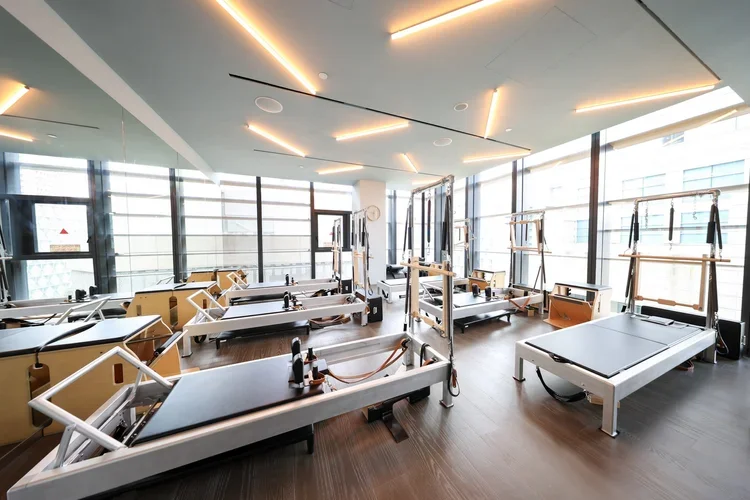
Every session with Coach Poppy at OUE Downtown begins with a thorough movement assessment. She identifies what’s working well, what isn’t, and what your body specifically needs. From there, your programme is built around you, your history, your goals, your movement profile and it evolves as you progress.
The approach combines the precision of clinical Pilates with the contextual depth of physiotherapy and strength training. If you’re working on a specific rehab goal, your programme is designed to complement and accelerate that process. If you’re an athlete or active individual looking to perform better and stay injury-free, it’s calibrated to support that too.
Sessions are progressive by design. You won’t be doing the same exercises in week eight as you were in week one because your body won’t be the same body.
Move Better. Feel Stronger. Last Longer.
If you’ve been living with discomfort, noticing weaknesses in your movement, or simply want to build a body that performs well and holds up over time — 1-1 Pilates with Coach Poppy at SCA is worth your attention.
→ Book your 1-1 Pilates session at SCA OUE Downtown today.
Because intelligent movement isn’t just about looking fit. It’s about being able to do everything you love, for as long as possible.